Showing posts with label data quality. Show all posts

Tuesday, February 2, 2010

Evaluating Marketing Automation - Data Management


Continuing on a theme that received great feedback, I wanted to provide another real, down in the details, way to evaluate the various claims in the marketing automation field. Last time we looked a way to ensure that a provider could have the performance needed for your marketing goals - a quick and simple upload that will test actual marketing automation system performance.

In this post, it's worth taking it one step further. Getting marketing data into a platform is one thing, but if the data is messy (and what marketing data isn't), it will not be of much use. If, for example, your marketing database has 100,000 names in it, and the titles are just as they were written, such as:

  • VP Marketing
  • V.P. Mktg
  • Vice Pres Marketing
  • Marketing Vice President
  • Mktg VP

and you are asked to build a list of Vice Presidents of Marketing to target, how many will you find? 300? 800? We've seen many situations where dirty data returned 300 names, but the same query against cleansed data returned 17,000 names. Proper management of data makes a huge difference in your marketing results.

So, how do you test for this when considering a marketing automation software investment?

Quite simply - ask, in a demo, for each vendor you are considering to run a quick test. Here is a sample CSV file with typical marketing data. Titles, states, and countries are as they would be in a normal marketing or CRM database. The data is kept simple, and the titles are mostly in sales, marketing, and finance, while the addresses are in Canada, US, and UK.

Have each vendor run the following test for you:
  • Upload the sample file
  • Clean up the country fields so that US, USA, U.S.A, as well as the variations of Canada, and England/UK are normalized
  • Clean up the "raw" job title fields to two new fields for "level" (VP, Director, etc), and "role" (marketing, finance, etc) so you can properly segment
  • As a bonus, see if they can correct the missing leading "0" on New England zip codes - removed by Excel in many marketers' data files
When it is uploaded and cleansed check the data to see the following:

  • The only countries in the file are "USA", "GBR" and "CAN" or however you chose to normalize the country data
  • The people can easily be filtered by role into "Marketing", "Sales", or "Finance"
  • The people can easily be filtered by level into "SVP", "VP", "Director", or "Manager"

Many marketing challenges come from bad data. An inability to do proper segmentation, personalization, lead scoring, or analytics can quickly result if you are not able to standardize and normalize the data in your marketing database. To avoid getting into this situation, it's worth having the marketing automation provider you are thinking of choosing run through this quick test with real sample data.
BOOK
Many of the topics on this blog are discussed in more detail in my book Digital Body Language
SOFTWARE
In my day job, I am with Eloqua, the marketing automation software used by the worlds best marketers
EVENTS
Come talk with me or one of my colleagues at a live event, or join in on a webinar

Thursday, January 14, 2010

The Foundation for Great Marketing is Great Data


Data is key to all your marketing efforts. Whether it is segmentation, personalization, lead scoring, lead routing, or marketing analysis, if you don’t have clean and consistent data, your efforts will be built on the shakiest of foundations. However, when thinking about your marketing automation efforts, data management can often be an afterthought.

However, some minimal upfront efforts to understand and improve the quality of your data can greatly improve your effectiveness as a marketer.

Current Database

First, you need to understand your current database. There may be a significant amount of data in your database, but unless it is data you can work with, it will not be adding value to your organization. Some simple analysis should give you a good sense of your current state:
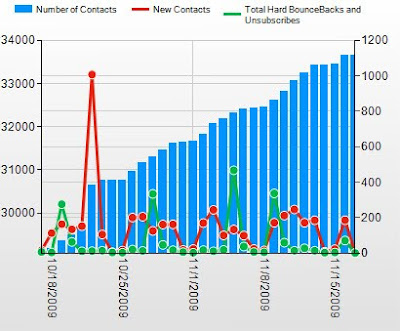
- Growth and Total Size: The simplest of metrics; analyzing both the total size of your database and its growth over time gives you a clear sense of what you’re starting with. Net new contacts add to your total, while bouncebacks, and unsubscribes detract from it. In this measurement, be sure that you are truly measuring unique contacts, without any duplication. The overall database size should be growing in a healthy manner, although growth rates can vary depending on the growth rate of your company and your industry.


- Active/Inactive: Of equal importance to size of your marketing database is the analysis of what percentage of your database is active or inactive. A basic definition around “active”, such as a certain number of emails opened or clicked, visits to the website, or form submits will give you an objective definition of who is active. Those who are inactive may have “emotionally unsubscribed”, and are unlikely to be future buyers. It is more important that the active component of your database is growing over time than the overall size.


- Completeness: Each field that is of importance to you should be analyzed for its completeness. In many marketing databases, key fields may be only 30% or less complete, which leads to challenges in using those fields for marketing efforts. If your analysis shows that fields are less complete than ideal, you may want to use progressive profiling to add data to those fields


- Consistency: Even if a field is filled, if the data is inconsistent, it can be very difficult to derive value from it. Fields like Title, Industry, Country, State, or Revenue are very often extremely inconsistent as the data can be input in a wide variety of ways. Analyze each field for the breakdown of what values are in that field and their percentages to see if the data is generally consistent or inconsistent.


Some marketing automation platforms are able to perform this kind of analysis, but there is a lot of variation in the industry, so ask the tough questions if you are considering a marketing automation investment as this analysis will be key to your success.

Data Sources

With your own marketing database quality understood, you then need to begin understanding your sources of data to understand what will make your data challenges worsen if not controlled. Marketing data comes from many different sources, each of which has its unique opportunities and challenges.

- Other Systems: Marketing often sources data from CRM systems, data warehouses, or customer data masters. The data from these systems often must be brought in on a nightly (or more frequent) basis, and integrated into your marketing data. In many cases, there is limited opportunity to change the format or quality of the original data, and it must be dealt with on import automatically each time it is imported


- Continual Sources: Web forms, tradeshow leads, webinar registrants, and trial downloaders contribute a steady flow of data to the marketing database. The continual nature of these sources means that as a marketer, your database is being updated 24 hours a day, 7 days a week. This means that data cleansing must be done continually, and inline, rather than as a batch process once or twice a year


- Controlled vs Non-Controlled: Many of the sources you deal with are not sources that you are able to control. Lists from tradeshows, business cards, and many web forms are not sources that you are able to control, so the data from them is of varying quality and varying standardization

Given that you, as a marketer, are dealing with a variety of data sources, many of which are out of your control, and many of which are operating 24x7, keeping the data clean and consistent can be a significant challenge. The best way to approach this is to build a “contact washing machine” that standardizes and normalizes your data. Each time data is touched, whether from a web form, a list upload, or from your CRM system, it should flow to the contact washing machine.

Again, this is an area to ask tough questions in if you are looking at making an investment in lead management software as it makes a significant difference to your success. Look for contact washing machines that are a single, centralized point of data cleansing, and can handle standardizing and deduping data fields from industry to title to revenue. The best option is to have a pre-built structure out of the box, that you can then modify to meet the exact requirements of your business.


Data and the User Experience

In thinking about data, there can be a temptation to burden your audience of prospects with the data requirements of your marketing database. This is never a good idea. Many studies have shown that the more fields you add to your web forms, the more likely you are to see users drop off and not fill them out. Similarly, the more you restrict the input options that you provide to your audience (such as only allowing drop-down select lists for an individual’s job title), the more frustrated your audience will become.

The best option is to approach the challenge in two ways. Progressive profiling can be used to ask for a minimal amount of data at each interaction, never ask the same question twice, but continually add to a modular profile. This allows you to minimize the number of fields being asked per web form, and maximize the conversion rate. For the data itself, given the user frustration added by constraining their options, and the fact that many sources of data are beyond your control anyway, it is often better to allow free-form data while managing its quality via a contact washing machine once it enters your marketing database.


Data as a Foundation for Great Marketing

Today’s best marketers are building their creative campaigns, precise segmentation, accurate lead scoring, and relevant personalization on a base of great data quality. In fact, when top CMOs talked about their marketing dashboards, the focus on quality data was key to each of their successes. Whether you have made a marketing automation investment, and are looking to maximize the return you get from it, or are considering a marketing automation investment and want to know the right questions to ask, data should be front and center. It’s the foundation upon which everything else in marketing rests.

(*this post was originally posted on the Focus.com marketing community)
BOOK
Many of the topics on this blog are discussed in more detail in my book Digital Body Language
SOFTWARE
In my day job, I am with Eloqua, the marketing automation software used by the worlds best marketers
EVENTS
Come talk with me or one of my colleagues at a live event, or join in on a webinar

Thursday, November 12, 2009

Data Management and Marketing Automation - Video


In order to successfully move beyond the most basic drip marketing, it’s crucial for B2B marketers to effectively manage the data that they are working with. There are two main reasons that data has become more critical than ever before. First, it is with us for longer. As we engage with our prospective buyers earlier in the buying cycle, and nurture them throughout it, we are using the data for longer than ever before. Secondly, as we work to use marketing automation software to understand buyers, and then communicate with each buyer based on his or her unique needs, we end up using the data for various rules and automated systems.

When data is used by a marketing automation system for rules or automated systems, it needs to be clean and consistent. For example, in building a lead scoring algorithm, defining a target segment, or reporting on results, it is crucial that a title, an industry, or a country is represented in a consistent way so no contacts are missed.

In this quick but instructive video, Chris Petko, Eloqua’s Director of Marketing Operations talks about how we at Eloqua manage data, and how it is captured, cleansed, and analyzed. Chris introduces his 3 C framework and gives some great recommendations on how best to manage data as a marketing organization:


(if the video above does not load, please click here to watch Chis speak about marketing automation and data management)


Chris also discusses the Contact Washing Machine concept that automatically manages each and every data touch-point, and ensures that the data is cleansed and normalized. Chris discusses why this must be done inline, rather than as a one-time manual effort, given the way in that marketing data is continually updated via web forms, list uploads, and data flowing from other systems such as CRM.

I hope you enjoyed watching the video, and found Chris’s experience useful in your marketing operations. As someone who deals with marketing data on a daily basis, Chris has a lot of experience in exactly what aspects of data management matter, and how to approach it.
BOOK
Many of the topics on this blog are discussed in more detail in my book Digital Body Language
SOFTWARE
In my day job, I am with Eloqua, the marketing automation software used by the worlds best marketers
EVENTS
Come talk with me or one of my colleagues at a live event, or join in on a webinar

Monday, August 31, 2009

Marketing Automation Weekly Wrap-up - 2009/08/31


More great posts over the last week-and-a-bit from the marketing automation and B2B marketing blogging community. Some good analysis of data in this week's set - data from surveys, data on FriendFeed usage, and data on how data ages. I hope you enjoy these posts as much as I did:


Laura Cross (@lauracross) from Marketing Insights draws a comparison between direct marketing teasers and the relationship between emails and landing pages in this quick but insightful video:

http://marketinginsights.eloqua.com/2009/08/25/using-email-as-a-teaser/


David Raab (@draab) at the Customer Experience Matrix looks at the Pedowitz Group’s Sweet platform which ties social media and marketing automation together:

http://customerexperiencematrix.blogspot.com/2009/08/pedowitz-groups-sweet-suite-builds.html


Lauren Kincke on the B2B Lead blog provides some interesting and surprising stats on how quickly data gets dirty and hence why it should be a key priority for marketers:

http://blog.reachforce.com/sales-and-marketing-tips/6-scary-dirty-data-stats/


Brian Carroll (@brianjcarroll) from Start with a Lead discusses what is actually lead nurturing vs what many execs think is lead nurturing. A focus on helping the prospective buyer better understand the space and solve their pains is key, not just a repeated attempt to sell:

http://blog.startwithalead.com/weblog/2009/08/what-is-and-isnt-lead-nurturing-.html


Steve Kellogg (LinkedIn) from Crowds2Crowds writes a letter to sales introducing all that marketing can do for them. A great foundation for thinking about how to get buy-in from your sales team to marketing’s efforts:

http://crowds2crowds.blogspot.com/2009/08/but-waittheres-more.html


Mike Damphousse (@damphoux) from Green Leads shared a few results from his recent poll of sales and marketing execs. Key takeaways: outbound marketing is still more common than inbound, for now, and at least 1/3 of senior execs will delegate down to directors when looking to understand vendor offerings:

http://www.damphousse.org/2009/08/poll-demand-gen-experts-use-equal-mix.html
http://www.damphousse.org/2009/08/b2b-appointments-third-of-cvp-execs.html


Jep Castelein (@jepc) from Lead Sloth starts a good discussion by looking at the top reasons that marketing automation projects fail. Typical causes are unclear business focus, and relying on technology alone, rather than people, process, and technology:

http://www.leadsloth.com/blog/marketing-automation-projects-fail/


Dharmesh Shah (@dharmesh) at Hubspot provides some very interesting stats on FriendFeed and how it’s used. Surprisingly experimental and early adopter usage profile:

http://blog.hubspot.com/blog/tabid/6307/bid/5026/State-Of-FriendFeed-14-Things-You-Probably-Don-t-Know.aspx
BOOK
Many of the topics on this blog are discussed in more detail in my book Digital Body Language
SOFTWARE
In my day job, I am with Eloqua, the marketing automation software used by the worlds best marketers
EVENTS
Come talk with me or one of my colleagues at a live event, or join in on a webinar

Tuesday, June 30, 2009

Data Management Is as Sexy as a High Quality Mattress


I'm excited to have Tim Wilson from Gilligan on Data contribute today's guest post. Tim is one of the smartest guys on data management and data quality in the industry and brings a great perspective on what works in the real world. He also has one of the wittier writing styles out there, that makes his posts fun to read. I enjoyed this one, and I hope you do too.


=======================================


When Steve asked me to write a guest post about marketing automation and data quality, I couldn't resist, as we've been going back and forth on our respective blogs exploring the issue. It really started with Steve's Contact Washing Machine post late last year, which he followed up with in April of this year with a post about the need for that washing machine to be managed in-house, largely due to the diversity of sources of contact data. I added my own thoughts about the teeter-totter of customer data management a month later. That back and forth led to Steve thinking I might have a worthwhile direct contribution to his blog.

So, here it is:

Data management is like a mattress. It's not nearly as interesting as what gets done with it (on it)...but it's still awfully important!

The truth is, you can ignore the mattress and still get some interesting things done, but, eventually, as you wake up with a sore back, as you don't sleep well in the first place, and as you get shoved into awkward positions by pits and valleys...the interesting stuff just isn't going to be as interesting and effective.

Let's see how far we can push this analogy before it absolutely collapses under its own metaphorical weight.

Know What's Important about Your Mattress

Imagine the scenario: you're a spastic sleeper, flailing about on the calmest of nights; your significant other is a very light sleeper and wakes up at the slightest of touches. What's important? A mattress with enough room for you to roam about. That may be way more important to you than, say, the firmness of the mattress, which may be very important to someone with a chronically sore back.
It's easy to shoot for the stars with your contact data by trying to ensure that every contact attribute you capture is complete, accurate, and current. The problem is that shooting for a star is overly ambitious -- NASA is only now getting close to pulling that off for the first time. The same goes for your contact data. If you expect to have all of your data 100% clean, you will wind up with all of your data equally dirty, and it will hurt you. Prioritize your contact attributes so that you know what data is most important. The most important data will always be your core communication details: email address, mailing address (if you use direct mail as a communications channel), phone number, etc. After that, it really depends on your long-term marketing strategy -- focus on the data that matters most.

Start with a Good Mattress

Steve's contact washing machine is one example of this: at every point where you are capturing contact data, do what you can to capture it accurately. Be prepared to invest more -- in internal technology development as well as in third-party tools -- to ensure the highest accuracy of your most critical data. For instance, check that the e-mail address the prospect provides is well-formed. If the mailing address is a high priority, then, for U.S. addresses, consider validating the address provided against a CASS-certification tool. Build in other logical checks -- can the user put in that they have 5,000 employees at their company but have annual revenue of less than $1 million of revenue?

Be careful: it can be tempting to build in all sorts of logic to check that you are capturing good information, but that can be risky for two reasons:


  • Faulty logic in your checking -- we've all been to a web site at one time or another that tells us we've entered something incorrectly...when we haven't. I've been on the inside of a company that had this happening with one of their most highly-trafficked lead acquisition points. It's not pretty. It's better to get 95% perfect data quality and have 100% of the visitors to your site get to the information they want than to have 99% data quality and 10% of your visitors getting caught in an endless (flawed) validation loop that leads them to give up and leave (with a bad taste in their mouth about your company).


  • Losing sight of your priorities -- have you ever been to a web registration form with the "Red asterisks denote required fields" note...and then every field has a red asterisk? This is bad. Yes, you want your data as clean as possible, but you want the data that is most important to really be clean. Prioritization sucks, but you've got to do it.


Flip Your Mattress

"Will everyone in the room who has flipped their mattress in the past six months as per the manufacturer's instructions please stand up? Wow. There's one guy. Usually no one stands up when I ask that question. Oh. He's just taking a call on his cell phone."

Data management cannot stop at the point that you've got your data capture mechanisms set up. This is where the mattress analogy breaks down a bit, as ensuring that you are constantly working on the quality of your data is wayyyy more important than your mattress-flipping schedule.

Here's the contact data-equivalent mental exercise to the mattress-flipping survey above:


  • How many people are in your department at work? How many of those people joined the department in the last year? How many people were in the department a year ago and are not any longer? How many people have had a change in job title or responsibilities in the last year? Given your answers to these questions, roughly speaking: what percentage of your department has had key attributes of their contact profiles change in the last year? 10%? 20%? More?


  • Now look at your database. What percentage of your contacts have had no updates to their key profile data in the last year?


Do you see where this is heading?

The point: we tend to be wildly optimistic about the quality of our contact data, because we underestimate how rapidly that data decays. We assume that the rest of the business world is more static than our own immediate environment.

This is where marketing automation, and your overall marketing program, really start to show their symbiotic relationship with the management of your contact data. All too often, we live with some cognitive dissonance, in that, when we talk about the quality of our customer data, or when we manually inspect a handful of records, we quickly realize that much of the data is old or incomplete. We then turn around and build automated marketing programs that pretend the data is perfect. We reconcile this by telling ourselves that it's the best data we have, it's better than nothing, and there's nothing we can do about it. This is not true.

While there is no magical, easy way to maintain your customer data quality on an on-going basis, you do have opportunities in many of your marketing activities to fight off the beast of data decay:


  • When known users hit a registration form on your web site, prepopulate it with the data you have about them and include a simple note asking that they confirm the accuracy of the information before submitting the form


  • Alternatively, or in conjunction with the above, add a persistent element throughout your web site that shows the 3-5 most critical fields about the visitor with a clear "Update my information" link


  • In direct mail and direct e-mail campaigns, include the explicit information (including information you have determined based on implicit/behavioral data, when applicable) about the person, with a secondary call to action for them to update that information. (For four years in a prior role I regularly received direct mail from Microsoft targeted to me because I was an "IT executive" who, apparently, had responsibility for IT infrastructure -- if there had been a way for me to tell them I was woefully misflagged in their database, I would have done so.)


  • Factor in the "last updated" date for the contacts when developing your promotional lists. You may already be running some form of reengagement program on old leads -- don't assume that the job title or role is remotely accurate for these contacts. If this program includes a, "We haven't heard from you in a while" component, a non-aggressive tactic can be to ask them to update their information and interests so that you will not bother them with information in the future that is not useful to them.


  • Don't assume that the humans in your company are thinking of data quality when they have direct interactions. Do some digging into your telemarketing and inside sales processes to ensure that they include steps to check for the currency and accuracy of the key data points when they interact with leads directly.


In short, flipping your contact data mattress is not something you can do with a few simple steps on a bi-annual basis. It really needs to be an on-going process that is embedded in small ways throughout your marketing programs, always keeping in mind that the burden on the contact himself/herself needs to be kept to an absolute minimum.

Sleep Well!

At the end of the day, you want your contact data to be as accurate as possible so you can drive more sales. A better mindset, though, is to recognize that "more sales" is the end, and the means to that end is "provide more value to your leads by better understanding their wants and needs." In other words, contact data management is about being customer-centric first, which will lead to improvements in your lead qualification process, which will improve the handoff of leads to Sales, which will lead to higher revenue...and a good night's sleep!

BOOK
Many of the topics on this blog are discussed in more detail in my book Digital Body Language
SOFTWARE
In my day job, I am with Eloqua, the marketing automation software used by the worlds best marketers
EVENTS
Come talk with me or one of my colleagues at a live event, or join in on a webinar

Thursday, June 11, 2009

Is Data Quality the "New Black"?


Anytime I talk about data quality with a marketer, I always get the answer “yes that’s really important, but i don’t know where to start as we have so many problems and we don’t have the resources”. Well I believe that now it is more important than ever to implement a data quality plan, as the success of your campaigns depends on it. In fact it is so important, that I believe data quality will be the “new black” for this season of marketing campaigns.
We have found that customers that focus on data quality generate 267% more leads that those who don’t.

Why would that be? Quality data drives your segmentation and targeting, personalization and more accurate lead scores. All of these things help deliver higher quality leads to your sales team.

Let me walk you through the top 3 things you should do to maximize data quality:

  1. Identify the sources of all of your new data and prioritize the quality level of data from each of those sources:
    a. Your CRM system may be top priority
    b. But a list from a new sales rep may be lower priority

  2. Standardize the fields and values you are getting from those sources – whether it is fields on a form, or the information you are capturing at a trade show
  3. Finally put a system in place that cleanses new data to a minimum standard, “inline” as new contacts are added to your system – this is the critical part of the solution. Steve wrote a great article on the inline data cleansing concept or contact washing machine in April.

With these three steps you will ensure to be in vogue with this season’s marketing campaigns.

BOOK
Many of the topics on this blog are discussed in more detail in my book Digital Body Language
SOFTWARE
In my day job, I am with Eloqua, the marketing automation software used by the worlds best marketers
EVENTS
Come talk with me or one of my colleagues at a live event, or join in on a webinar

Tuesday, June 9, 2009

Data Quality: Balancing the Customer Experience


I was in a conversation recently with Tim Wilson from Gilligan on Data about the balance between the client experience and data quality when it comes to semi-standard data like title or industry. On one side of the spectrum, the best user experience is often free-form text. Forcing a user to select from a defined set of choices often leads to a frustrating experience. A short list of titles, for example, will often be missing a good match for the visitor’s title, and lead to a poor selection. A longer list forces the user to select from many, many options, and impacts their ability to quickly use the form.

However, on the opposite side of the spectrum, demand generation relies on clean data. Rules for such activities as segmentation, lead scoring, and lead routing may be built on such data fields as title or industry. Personalized content rules might select a piece of content based on visitor data, and analytics may present results that build off of the underlying data. In all cases, having clean data is critical to the success of these initiatives.

So, how do we balance the requirement for the best possible visitor experience with the need for cleansed data to work with within our marketing database? The answer is through using secondary data fields for standardized data. The user is allowed to input free-form data on the web form, which provides them with an optimal user experience.

As the form is submitted, this data is fed into an inline data cleansing system (such as a contact washing machine) to scrub the data. The free-form data is compared against a standard list of titles in the contact washing machine. Because this step is automated, and not part of the user’s experience, the size of the list of titles used does not matter, and accuracy does not have to be sacrificed.

However, when a match is made, the resulting data can be fed into a secondary field, rather than back into the original field, leaving the user’s free-form data intact. In many cases, it may be useful to feed the data into more than one field. For example, when looking at a visitor’s title, it may be useful to split it into a “level” component (Vice Presidente, C-level, Manager, Director), and a “department” component (sales, marketing, finance, human resources).

As an example:
  • User Inputs: "V.P. Marketing"
which is then split into three data fields:
  • Raw Title is Maintained as "V.P. Marketing"
  • Level is Standardized as "Vice President"
  • Area is Standardized as "Marketing"

The personalization, scoring, segmentation, and routing rules that are needed can be built on the cleansed and standardized data, giving maximum accuracy and ease of use to the marketer. At the same time, the visitor is able to submit free-form data, which provides them with an excellent user experience.

BOOK
Many of the topics on this blog are discussed in more detail in my book Digital Body Language
SOFTWARE
In my day job, I am with Eloqua, the marketing automation software used by the worlds best marketers
EVENTS
Come talk with me or one of my colleagues at a live event, or join in on a webinar